The complete guide
How to Choose a Toddler Bucket Swing Seat for Your Backyard
The problem with giving a toddler a grown-up swing
Most backyard swing sets come with belt seats. They are fine for a five year old who can grip the chains and hold themselves upright. Give that same seat to an eighteen month old and you get the familiar scene: the child slides forward, the parent holds them with one hand and pushes with the other, and nobody is relaxed.
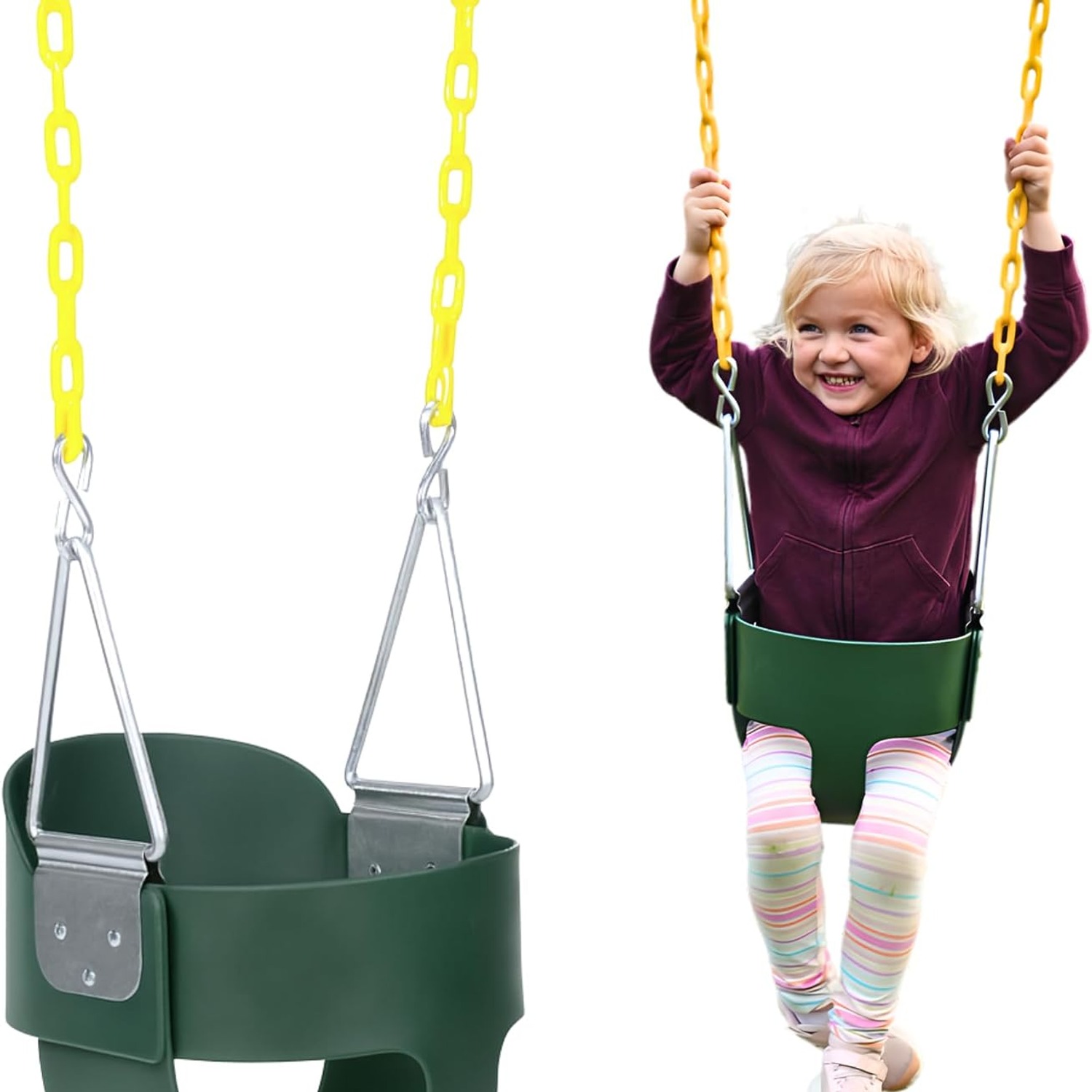
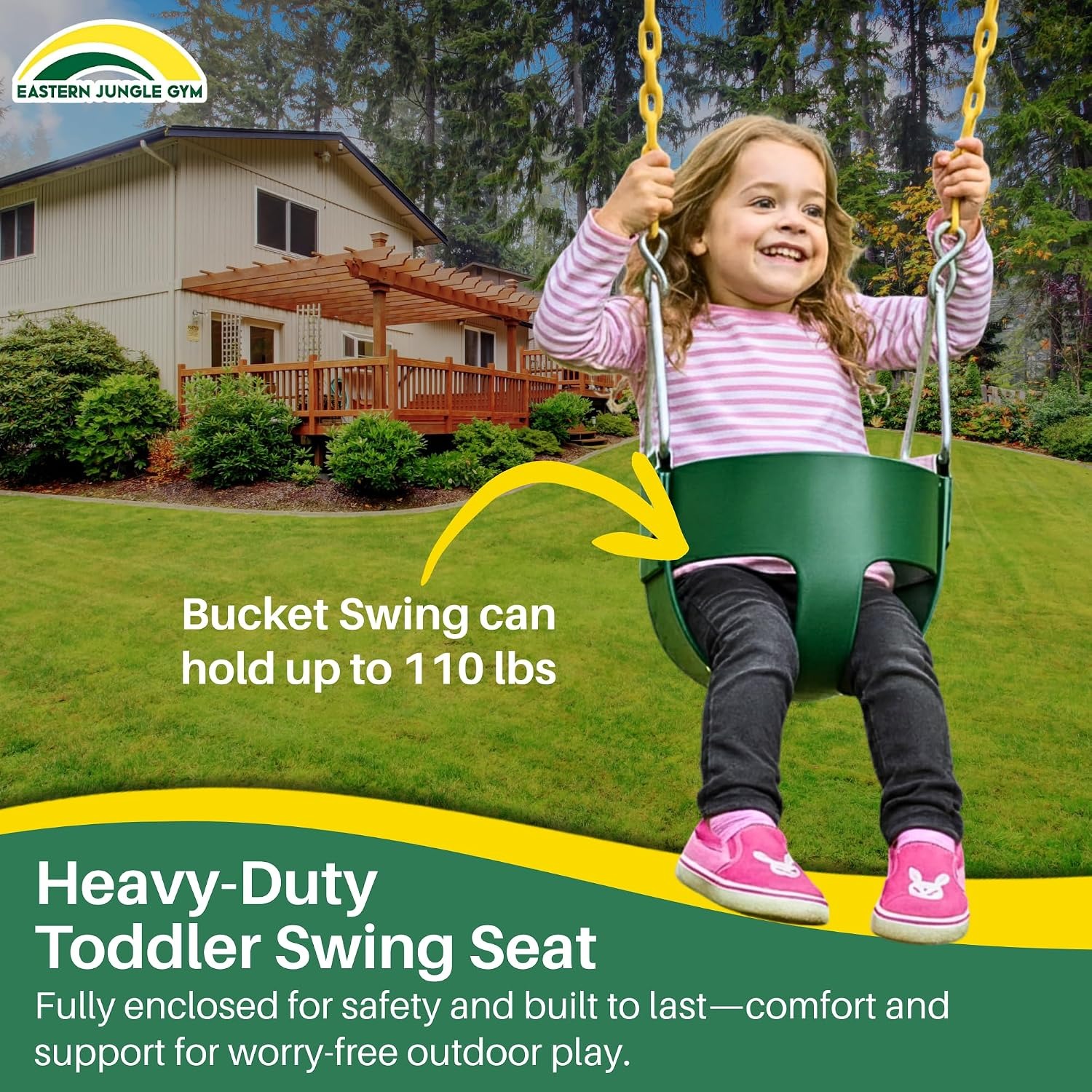
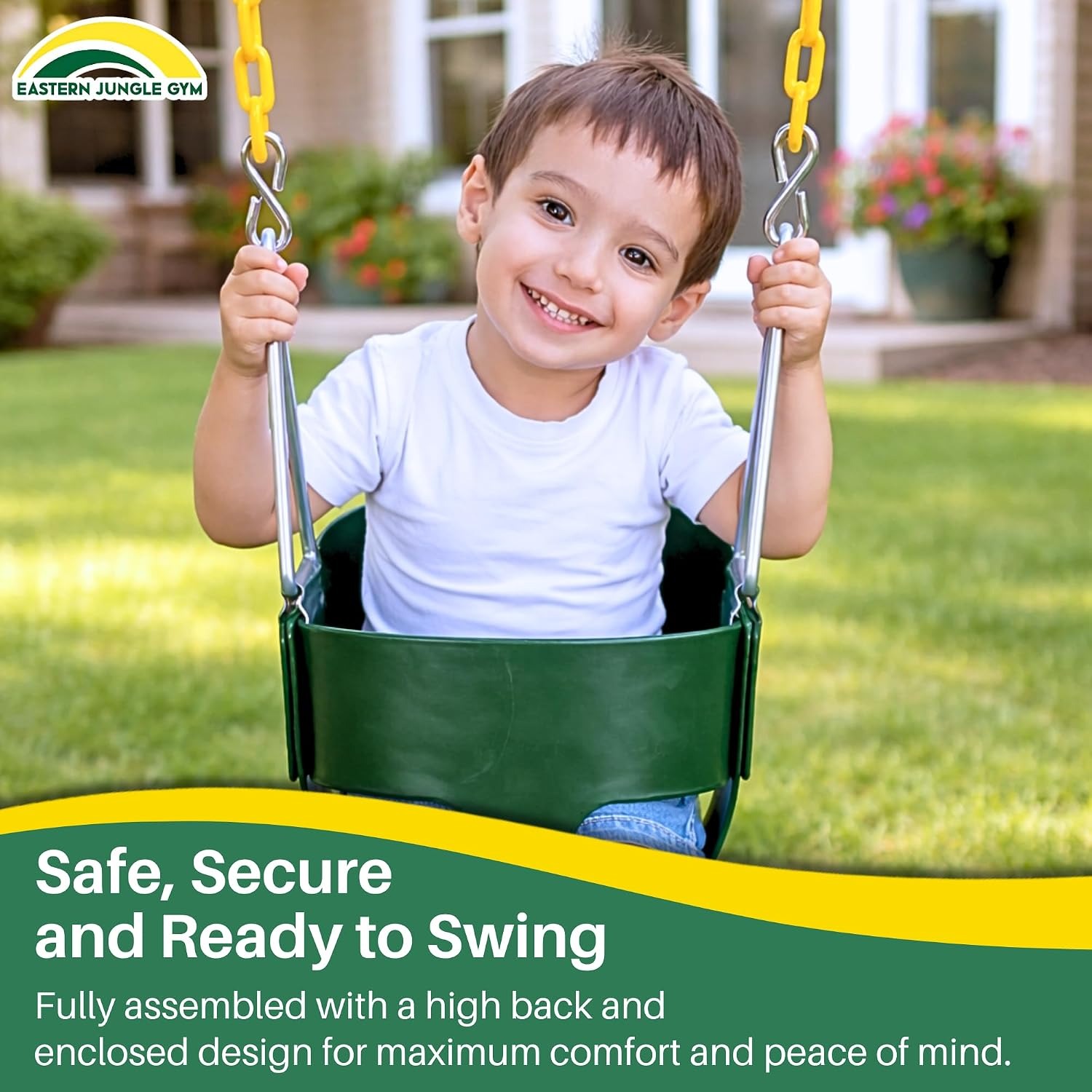
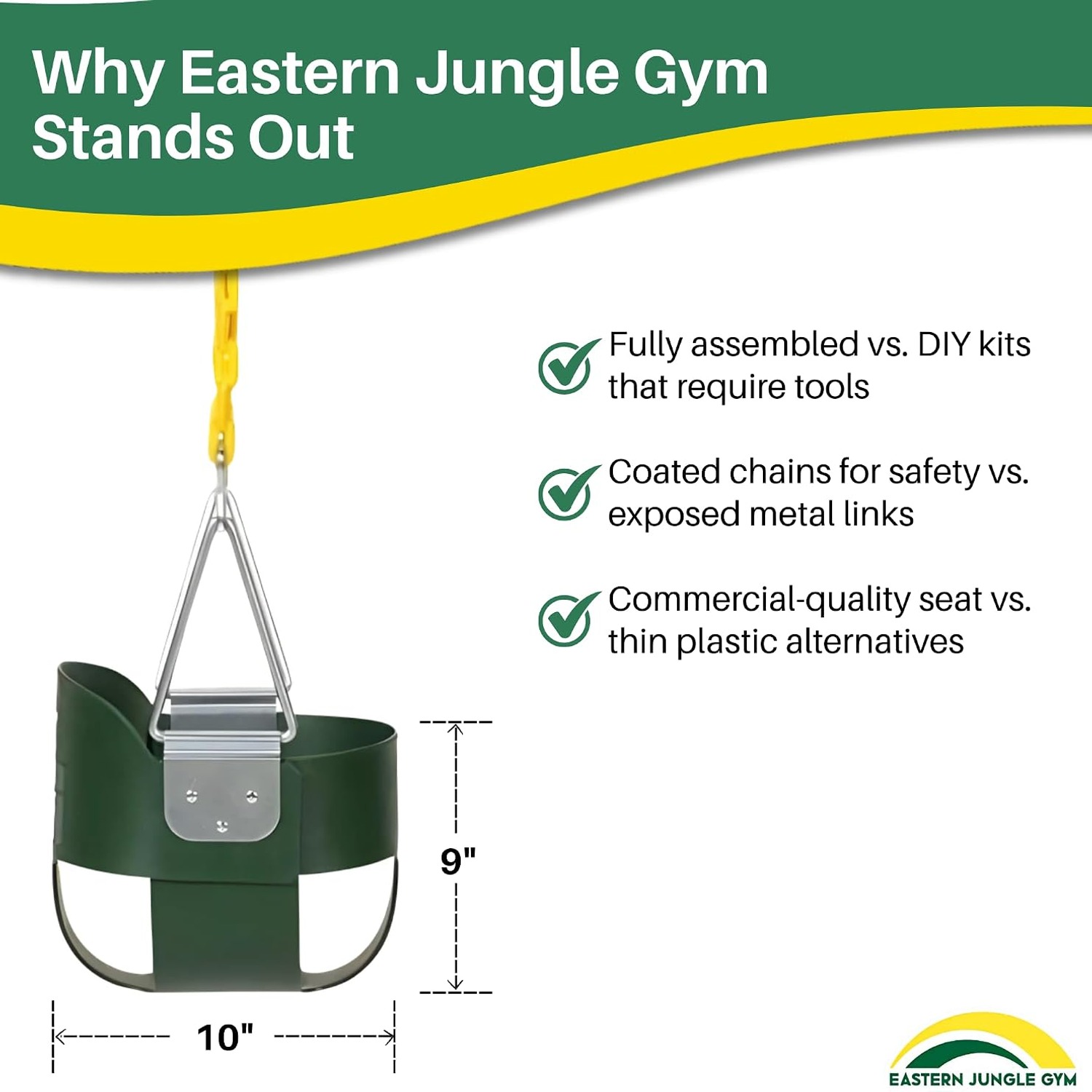
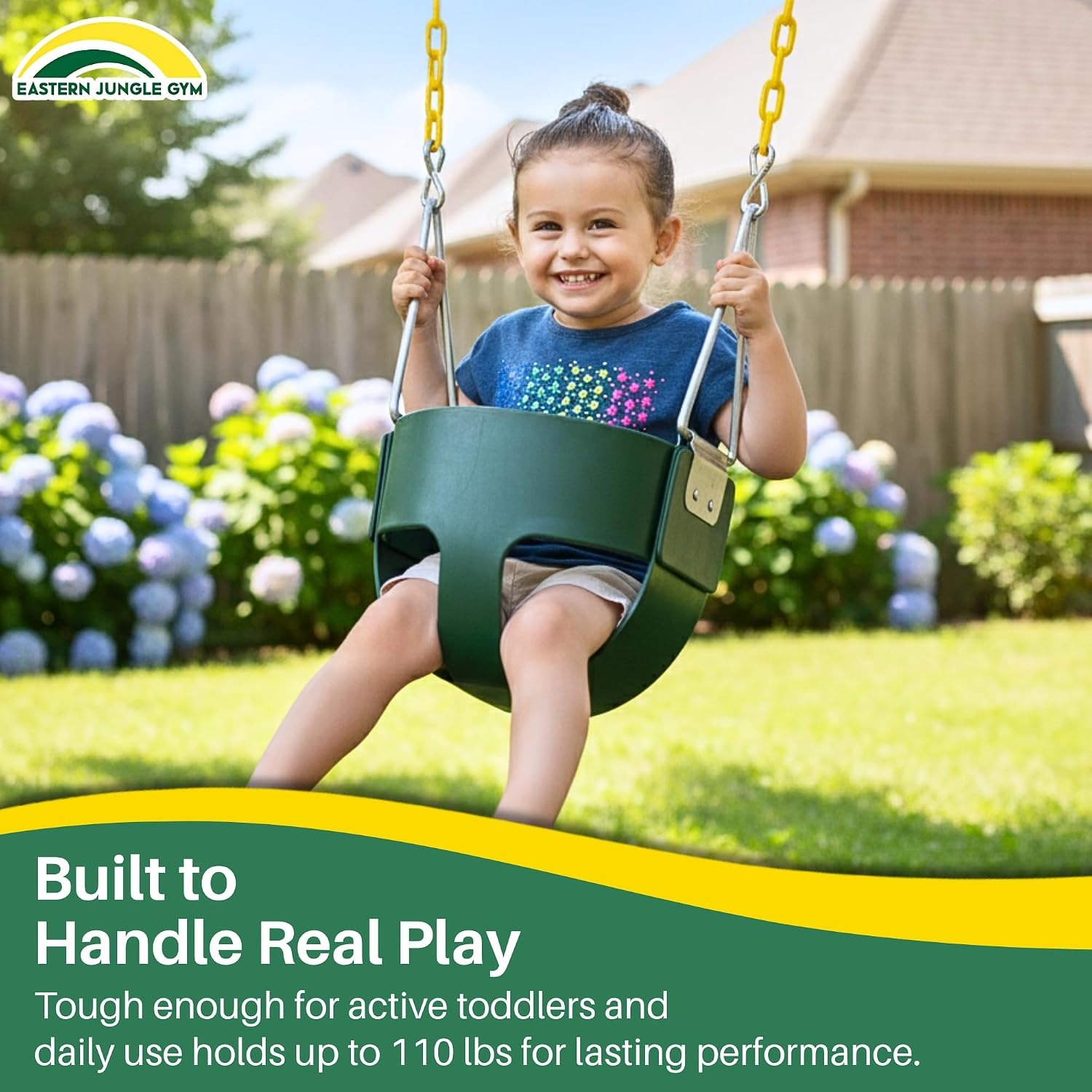
A full bucket toddler swing seat fixes that. Instead of sitting on top of a strap, the child sits down inside a moulded shell. The back comes up behind their shoulders, the sides wrap around their hips, and their legs drop through two openings at the front. They are held in position rather than balancing. That one change turns swinging from a two-handed job into something a child can enjoy while you stand back and push.
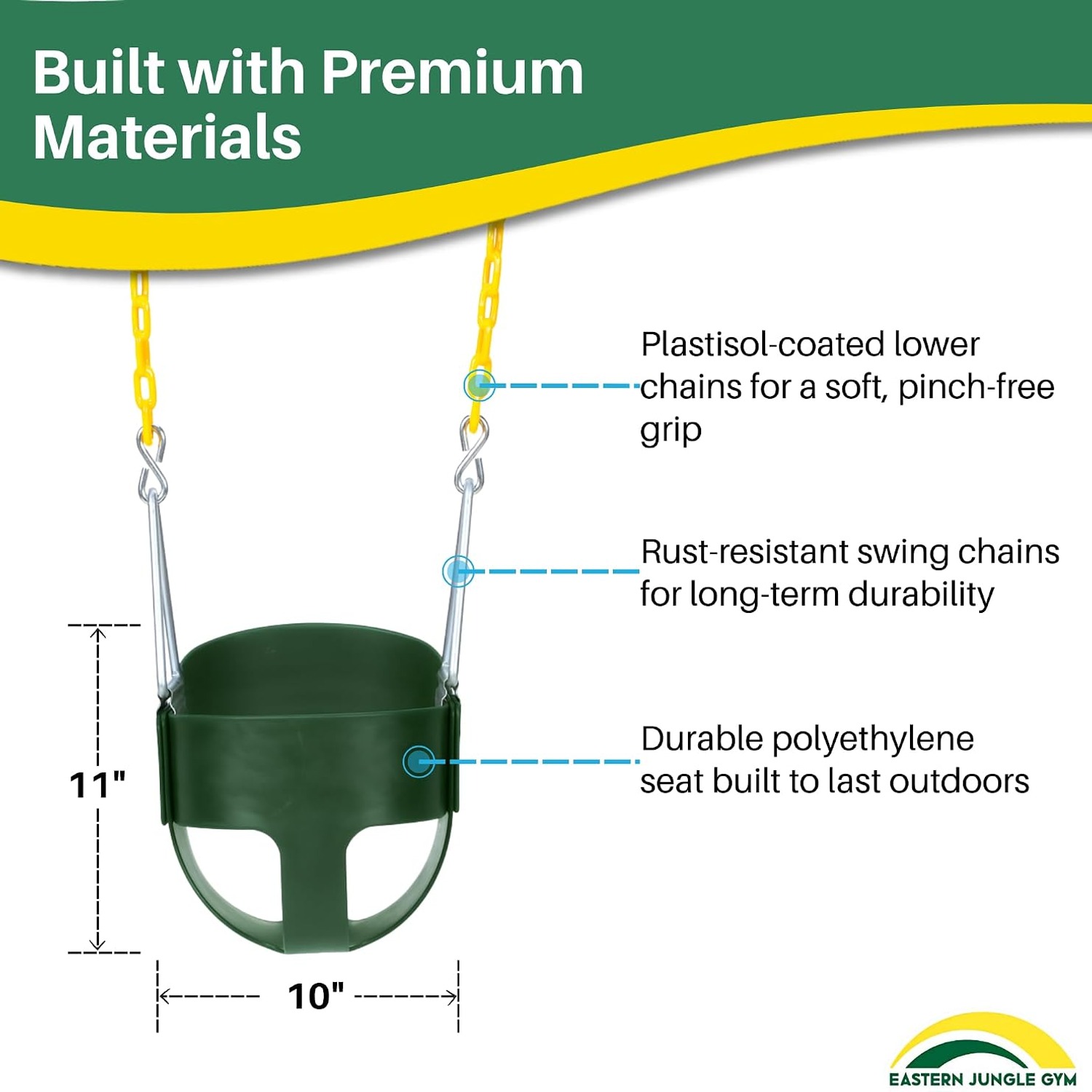
This particular seat is a green polyethylene bucket. It measures 33 cm front to back, 35.6 cm across and 30.5 cm high, with a seat depth of 29.2 cm. The chains are roughly 168 cm of zinc-coated steel, and the lower 76 cm is coated in yellow plastisol.
How a bucket swing actually works
There is not much mechanism to it, and that is the point. The safety comes from geometry. A deep seat with a high back has a low centre of gravity, so when the swing arcs forward and the child's body leans back, there is something behind them. When it arcs backward and they tip forward, the raised front edge and the leg openings stop them sliding out.
The chain detail matters more than people expect. Bare steel links are cold in winter, hot in summer, and they pinch. Coating the bottom 76 cm means the stretch of chain a toddler can actually reach is soft and continuous. There are no gaps for a finger to slip into at the height where a small hand naturally grabs.
The chains attach to most swing beams up to 2.7 m high. That covers the great majority of residential timber and metal sets. If your beam is lower, you shorten the chain with a rated quick link rather than tying knots in it.
Who this suits
The manufacturer lists an age range of 6 months to 5 years and a maximum weight recommendation of 49.9 kg. Age is a guide; readiness is the real test. Before a baby goes in a swing they should be able to sit up unaided and hold their head steady with no wobble. For most children that lands somewhere between six and nine months.
At the top end, children usually outgrow the shape before they outgrow the weight rating. When getting in and out starts to feel like a wrestle, or the sides press on the hips, it is time for a belt seat.
The seat suits a few situations well. Families converting an older child's swing set for a younger sibling. Parents replacing a cracked or sun-faded seat. Grandparents who want a swing for visits. And anyone hanging their first swing from a solid tree branch with proper hardware.
It is labelled for residential use only.
How to choose and set it up
Start with your beam height. Measure from the ground to the underside of the beam. With 168 cm chains, a nine foot beam leaves the seat sitting at a sensible toddler height. On a lower beam you take up the slack with a shackle or quick link on each side, keeping both sides exactly even so the seat hangs level. An unlevel seat tips a child sideways every time they swing.
Then look at your hangers. Standard swing hangers with a bolt through the beam are the right fit. If you have eye bolts screwed straight into timber, check they are the full length and not working loose. Anything that moves when you pull on it needs replacing before you hang a swing from it.
Next, the clearance. Allow at least two metres of clear space in front and behind, and keep the seat well away from fence posts, garden beds, tree trunks and the frame's own legs. A toddler swinging in an arc covers more ground than you think.
Finally, the ground. Grass, bark mulch or rubber matting all absorb a fall far better than paving or packed dirt. This is the single cheapest safety upgrade for any backyard swing, and it is worth doing before the first use rather than after the first tumble.
When you have it hung, test it yourself. Grab the seat and pull down hard, then lean your weight into it. If the beam, hangers and chains all hold without creaking or shifting, you are good.
Living with it day to day
The seat arrives fully assembled, which removes the usual Saturday afternoon of lost bolts. Open the box, hook it up, check the height. Most people have it swinging inside ten minutes.
Cleaning is straightforward. Warm water and a mild detergent, a soft cloth, rinse and let it dry in the air. Skip the solvents and bleach, which dull plastic over time. Bird mess and tree sap come off easily if you get to them before they bake on.
Maintenance is mostly looking. Before each session, glance at the chains and the hangers. Once a month, do a proper check: run your hand along each chain feeling for worn links, look at the leg openings for hairline cracks, and make sure the plastisol coating has not split. Tighten any hardware that has loosened. Swinging puts a cyclic load on everything, and bolts work their way free slowly.
Weather is the other factor. The plastic and the zinc coating are built for outdoors, but nothing lasts forever in full sun. If the seat spends summer in direct afternoon sunlight, expect some fading. In a hard frost, plastic gets more brittle, so if it is easy to unhook the seat and bring it into the shed for the worst of winter, that will add years to it.
When to move on
Watch for the signs. Legs that have to be squeezed through the openings. A child who protests about being lowered in. Shoulders sitting above the back of the bucket. Any of those mean the enclosed shape is no longer helping, and a belt seat with chains will give them more freedom.
Keep the bucket if a younger sibling is coming, or pass it on. These seats tend to have a second and third life in other backyards.
The short version
A full bucket toddler swing seat is the right answer for children who are too small for a belt swing. This one is green polyethylene, 33 by 35.6 by 30.5 cm, with a 29.2 cm seat depth, 168 cm zinc-coated chains and a soft plastisol grip on the lower 76 cm. It weighs about 3.54 kg, arrives assembled, suits beams up to 2.7 m, and carries a recommended age of 6 months to 5 years with a 49.9 kg maximum weight recommendation.
Hang it level, leave clear space around it, put something soft underneath, check the hardware now and then, and stay close while a small child is in it. Do that and you have a swing that works from the first sit-up through to school age.