The complete guide
Buying a Toddler Basketball Hoop, Without Wasting Money on a Toy They Outgrow
The problem with most first basketball hoops
Small children love throwing. What they do not have yet is aim, patience, or the height to reach anything a grown-up considers a target. So the classic mistake is buying a hoop that looks right in the shop and turns out to be a foot too tall at home. The child throws, misses, throws again, misses again, and loses interest in about four minutes. The hoop goes behind the couch.
The second mistake is the opposite. You buy something tiny and soft that works beautifully for six months, then your child grows and it becomes a baby toy they will not touch. Either way you have spent money on something with a short life.
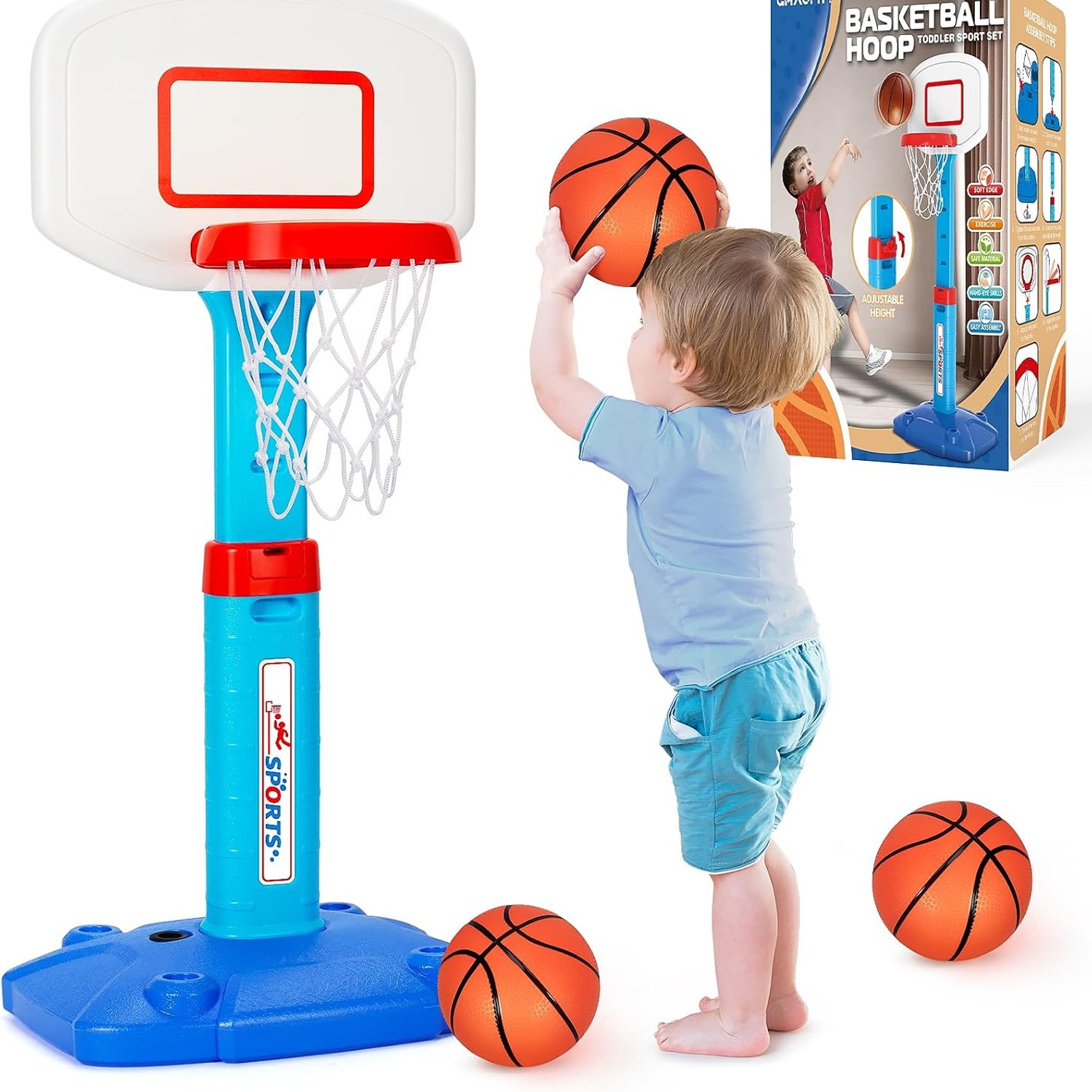
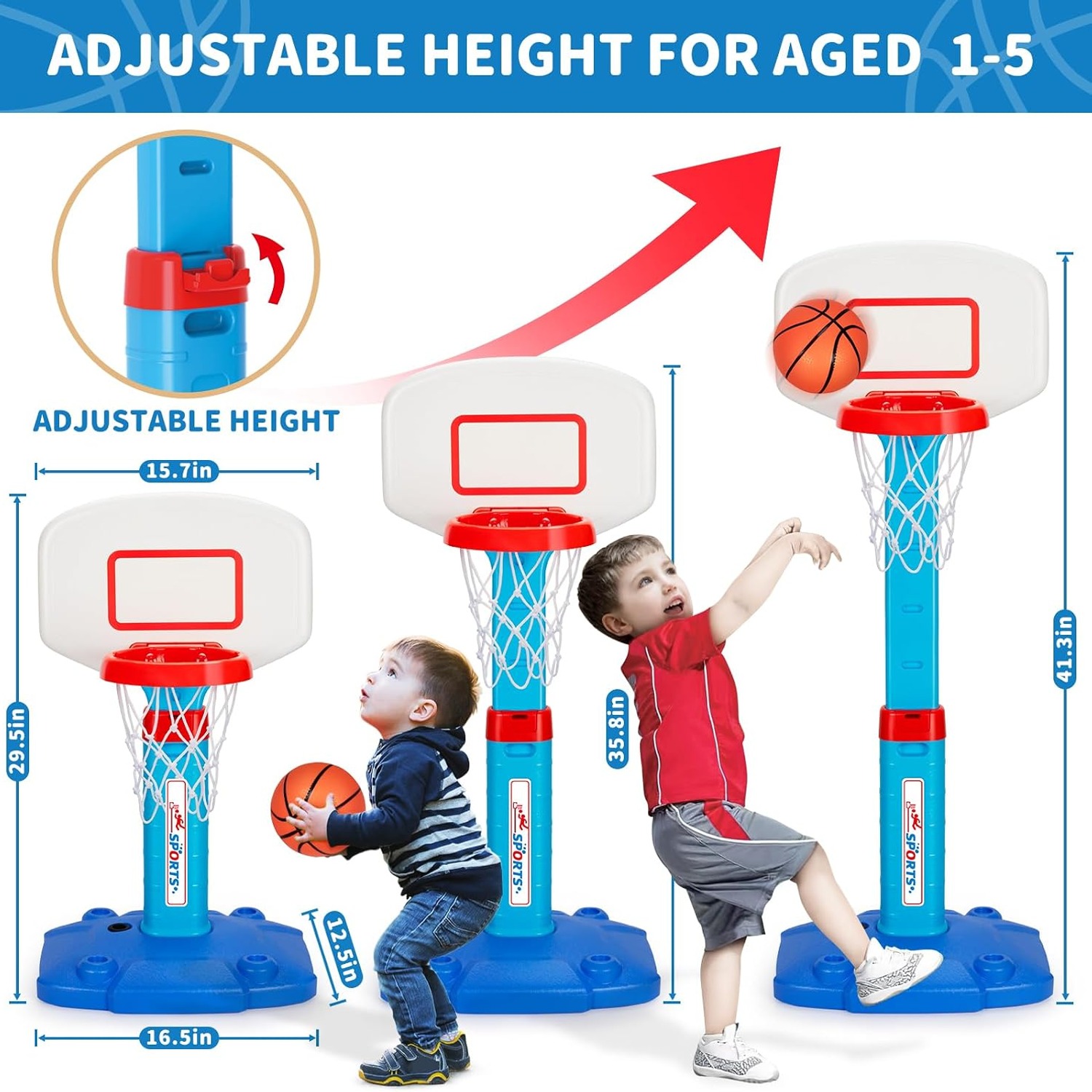
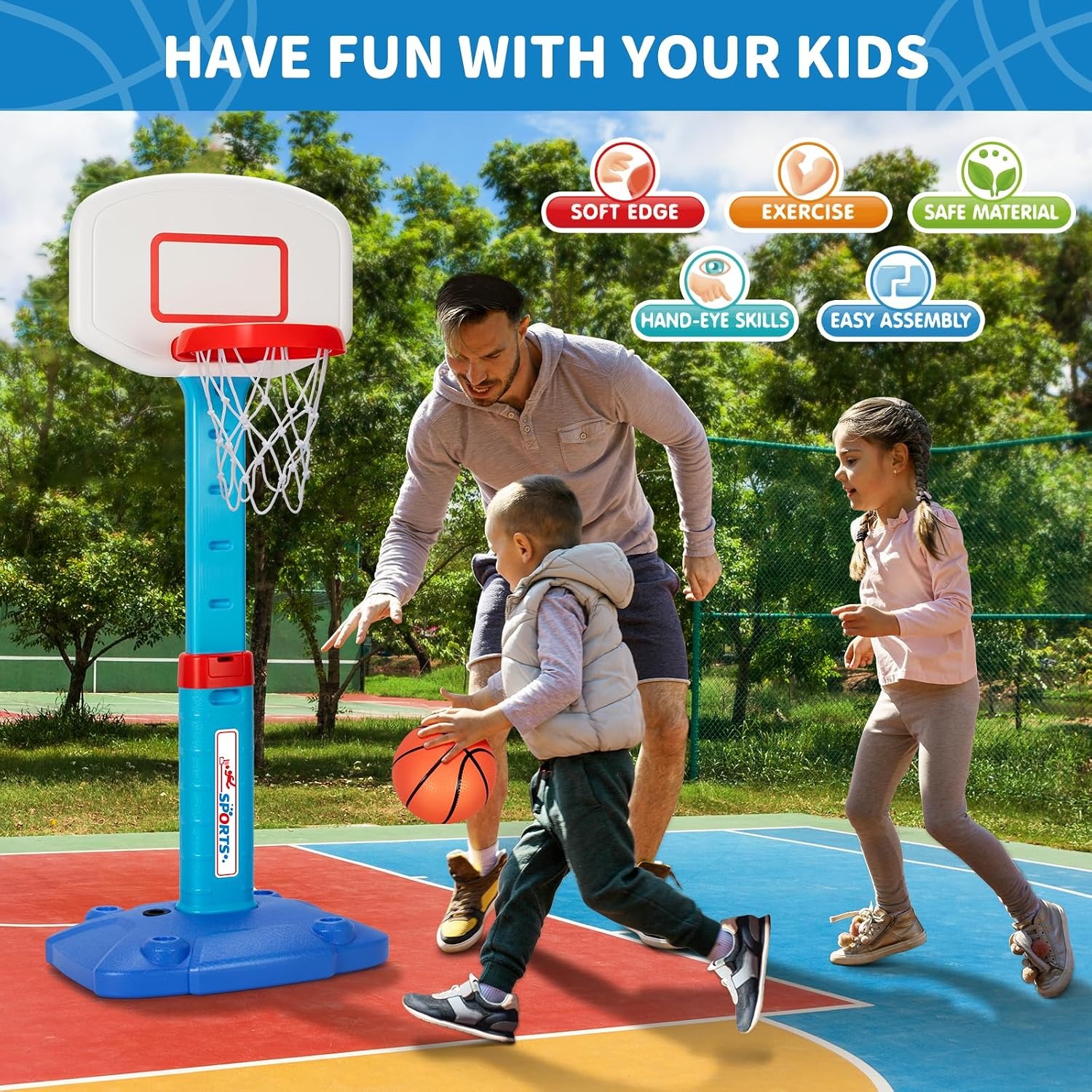
An adjustable kids basketball hoop solves both problems with one simple idea. The rim moves. This one has five slots on the pole, running from 75 cm at the bottom to 105 cm at the top. That is close to a foot of adjustment, which in toddler terms is a few years of growing.
How the height adjustment actually works
The pole has fixed positions rather than a continuous slider. You lift or lower the upper section, line it up with the slot you want, and lock it. There is no guessing and nothing to creep down mid-game.
Start low. Lower than you think. The point of the first few weeks is not practice, it is the sound of a ball going through a net and a small person shrieking about it. Once your child can land a shot most of the time from a step or two back, move up one slot. Each move feels like a new game rather than a harder version of the old one.
If you have two children of different ages, pick a height that is fair to the younger one and let the older one shoot from further back. That is a better handicap than constantly changing the pole.
Why the base matters more than the backboard
Everybody looks at the backboard. The base is what decides whether the hoop survives the year.
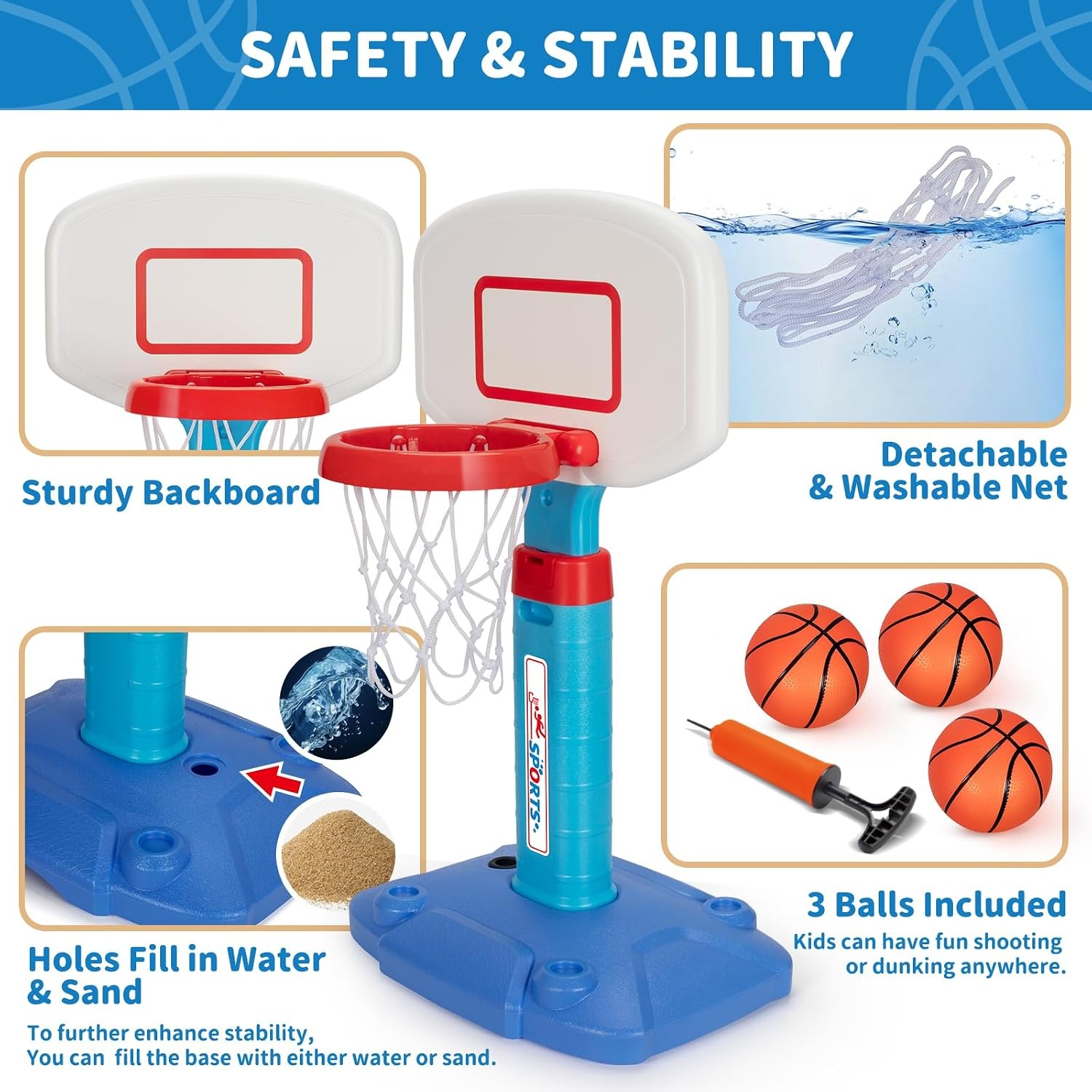
This one is a floor mount design, which means it stands on its own rather than hanging on a wall or a door. The base is built to be weighed down. You can add water or sand, or simply rest something heavy on it. An empty base on a smooth floor will tip the first time a determined three year old grabs the rim.
A few practical notes. Water is easy and free, but drain it before long storage so nothing sits inside. Sand is heavier for the same volume and will not evaporate, but it is messier to remove. If you move the hoop between indoors and outdoors a lot, a couple of bags of rice or a sandbag on top of the base is the fastest option of all.
Soft balls, and why they are not a compromise
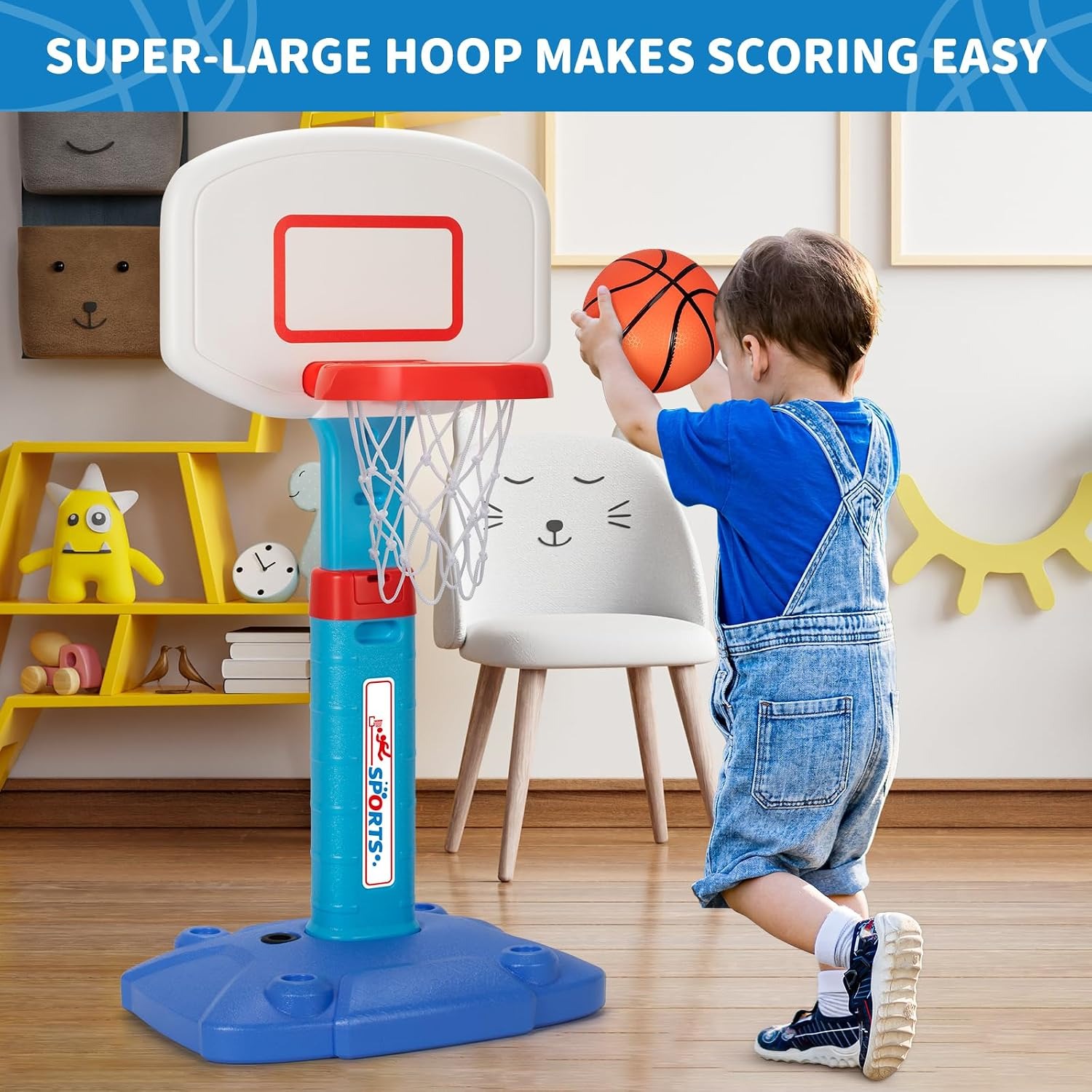
The set includes inflatable balls and a hand pump. Soft balls get dismissed as the lesser option, but for this age they are simply the right tool. A toddler cannot palm a real basketball and cannot catch one safely. A light inflatable ball sits in two small hands, does not hurt when it lands on a face, and does not take a chunk out of the skirting board.
Inflate them to the point where they hold a round shape and bounce a little, then stop. An overfull ball is slippery and harder for small fingers to hold. A slightly under-inflated one is easier to catch and more forgiving on the rim.
Keep the pump somewhere you will find it again. Inflatable balls lose pressure slowly, and a two-minute top-up every few weeks keeps the set feeling new.
Indoor, outdoor, and poolside
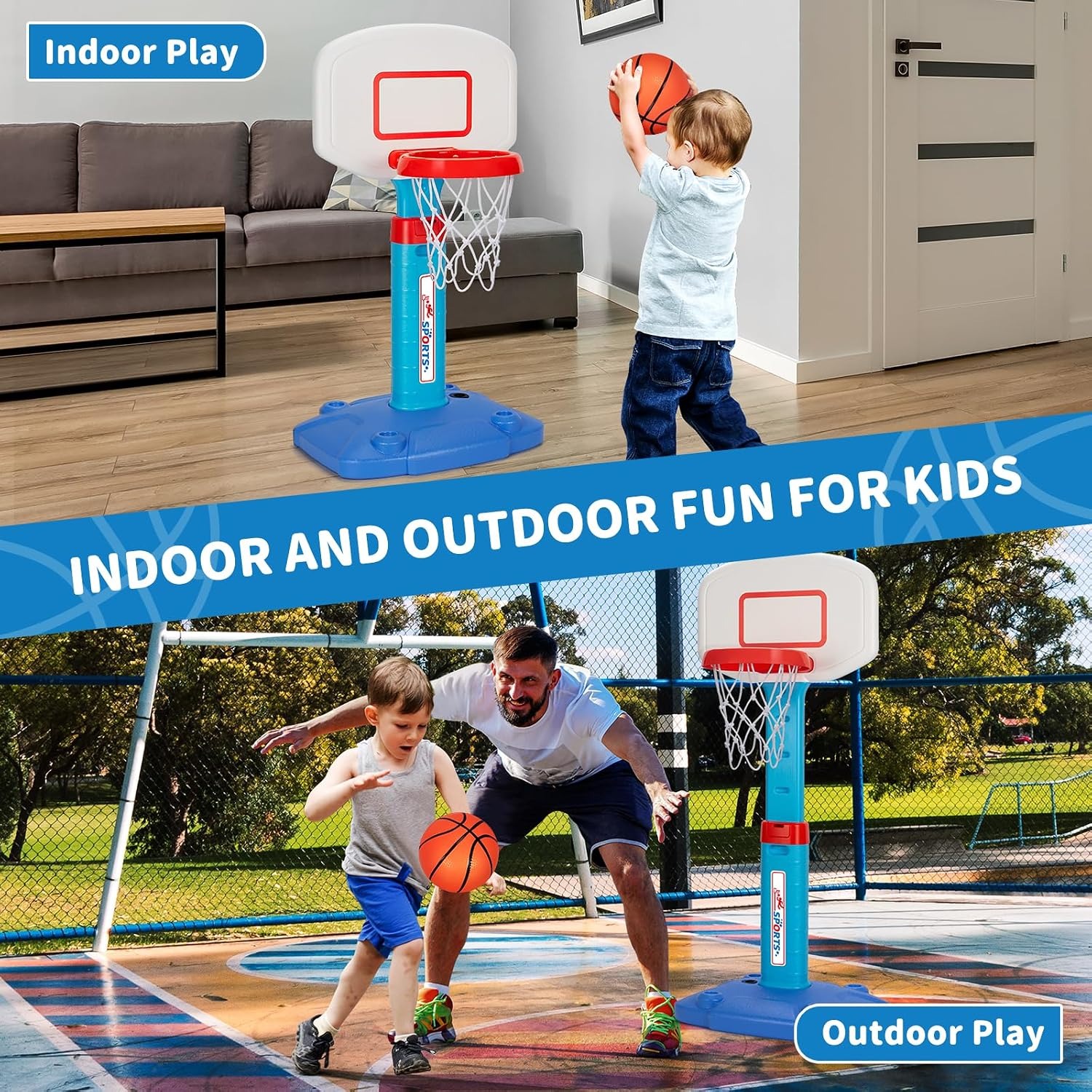
The maker lists indoor and outdoor usage as indoor, and the frame is plastic, so treat it as a toy that lives inside and visits the garden rather than one that lives outside permanently. That is not a limitation in daily use. The whole thing weighs very little, so carrying it out after breakfast and back in before dinner is genuinely easy.
For poolside play, put the base on a stable, non-slip surface and keep it well away from the water's edge. Children chasing a ball do not look where their feet are going. Rinse off chlorine or salt afterwards, since both are hard on plastic over time.
Leaving any plastic toy in full sun for months makes it brittle. A shaded spot or the garage between sessions is enough to avoid that.
Who this suits, and who it does not
It suits a household with a child somewhere between one and six who needs an outlet for energy indoors as much as outdoors. It suits families in apartments, where a full-size goal is out of the question. It suits grandparents who want something at their house that works for a visiting toddler and packs away small.
It does not suit a seven or eight year old who has started playing real basketball. At that point the maximum height of 105 cm is too low and a soft ball is no longer useful. It also does not suit anyone wanting a permanent outdoor installation, since this is a portable, lightweight set rather than a weatherproof fixture.
Setting it up well the first time
Assembly is required. Unpack everything onto a clear floor and check the parts against the instructions before you start, which saves the annoying discovery of a missing screw halfway through.
Build the base first, fit the pole, then attach the backboard and rim. Set the starting height before you weigh the base down, because an empty base is much easier to lift and steady. Tighten fittings firmly but do not force plastic threads.
Keep the instruction sheet for a few weeks. You will want it when you change the height for the first time, and it usually lists part names if you ever need to ask about a replacement.
Keeping it in good shape
Care is simple. A damp cloth with mild soapy water handles most dirt on the pole, backboard and base. Dry it before storing so water does not sit in joints.
Every month or so, give the hoop a shake and check that the height pin and fittings are still tight. Play loosens things. A thirty second check stops a wobble becoming a snapped part.
For long storage, empty the base, let a little air out of the balls, and keep the whole set somewhere dry and out of direct sunlight. Done that way, it comes out of the cupboard next summer in the same condition it went in.
The short version
Buy for the height range, not the look. Five slots from 29.5 to 105 cm means this hoop works for a wobbling one year old and still works for a confident five year old, which is the main thing that separates a toy worth buying from one that gets outgrown.
Weigh the base down properly, keep the balls at a sensible pressure, start lower than feels right, and move up a slot each time your child starts making most of their shots. That is the whole method. The rest is just letting them throw.