The complete guide
Choosing a Kids Camping Play Set That Actually Gets Played With
The problem with most big toys
There is a particular kind of toy that looks brilliant in the box and then sits in the corner of a bedroom gathering a jumper over it. Usually it is big, usually it only does one thing, and usually the child has worked out everything it does within about ten minutes.
A plain play tent can fall into that trap. It is a great thing to have, but on its own it is a space with nothing happening in it. Kids crawl in, look around, and crawl back out. The tent needs a story attached to it, and that is really what a kids camping play set is trying to solve. The tent is the setting. The gear is the plot.
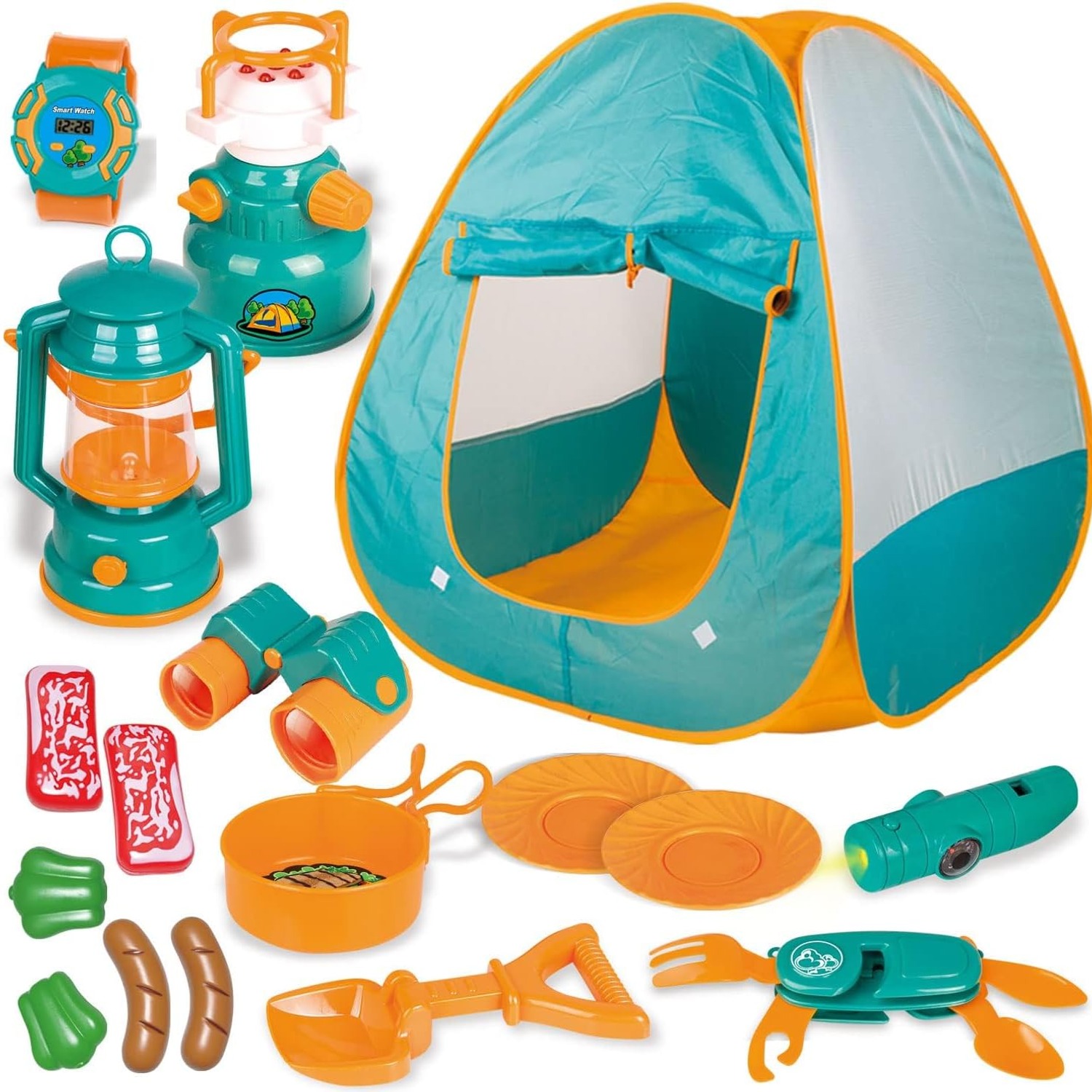
This set pairs a collapsible pop-up tent with 18 pieces of pretend camping equipment, which means a child opens the box and immediately has something to do rather than something to sit in. The lantern gets hung up. The stove goes in the corner. The binoculars get used to scan the hallway for bears. That difference, between a space and a scene, is why some tents stay in use for years and others get folded away by the second month.
How the set works
The tent is a pop-up design, so there are no poles to thread and nothing to build. It springs open on its own and the fibreglass or spring steel frame holds the shape. When playtime is over, you twist and fold it back down into a flat round disc. The first fold usually takes a minute of fiddling. After that it becomes muscle memory, and it is one of the main reasons the best pop up tent for kids designs work so well in small homes.
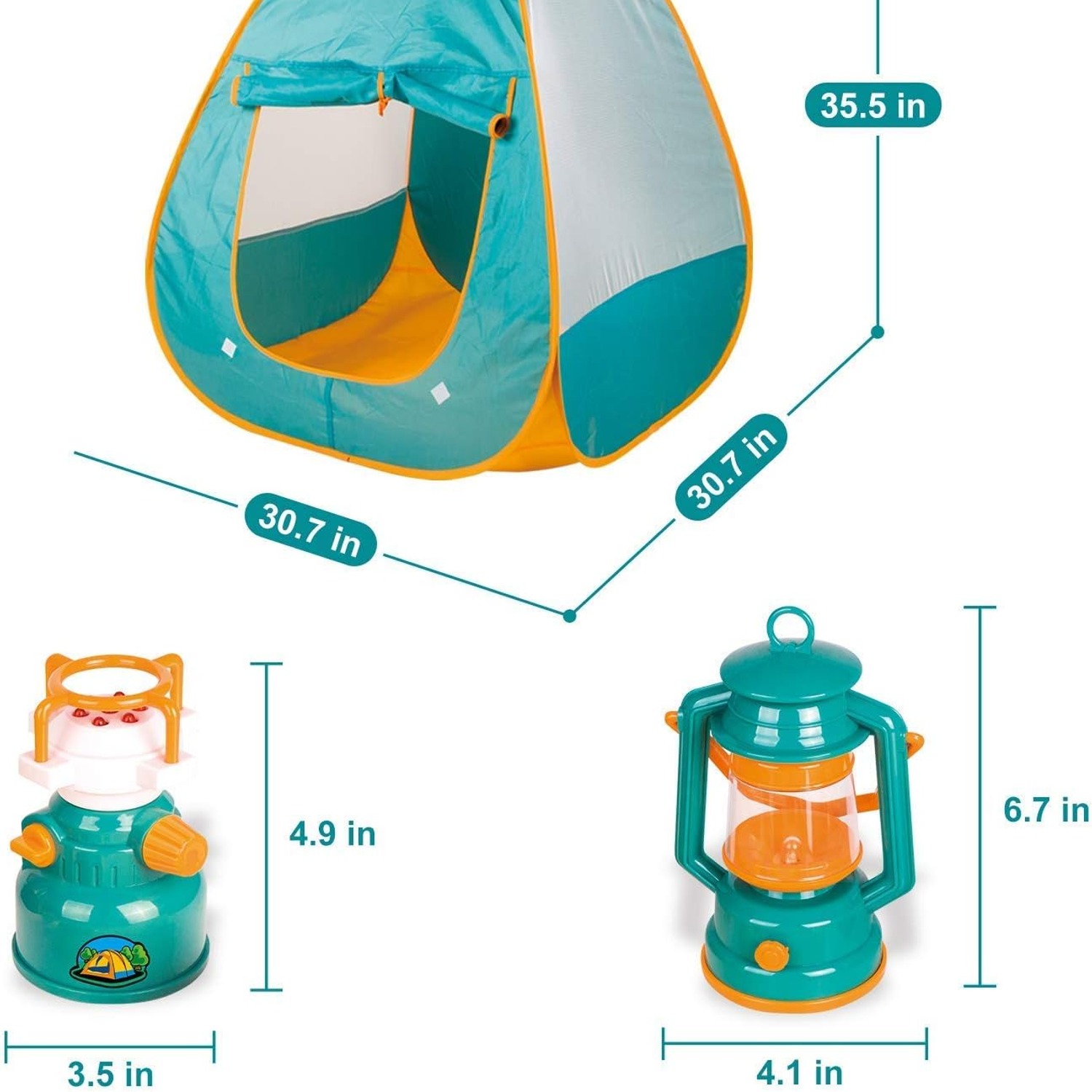
Size-wise, the listed dimensions are around 78 centimetres across and just over 90 centimetres tall. In practice that means a preschooler can sit upright inside with a cushion and a couple of books. It is a one-child space with room for a friend to lean in through the door. On the floor it takes up about the same footprint as a small beanbag, which is worth measuring if you are putting it in a shared bedroom.
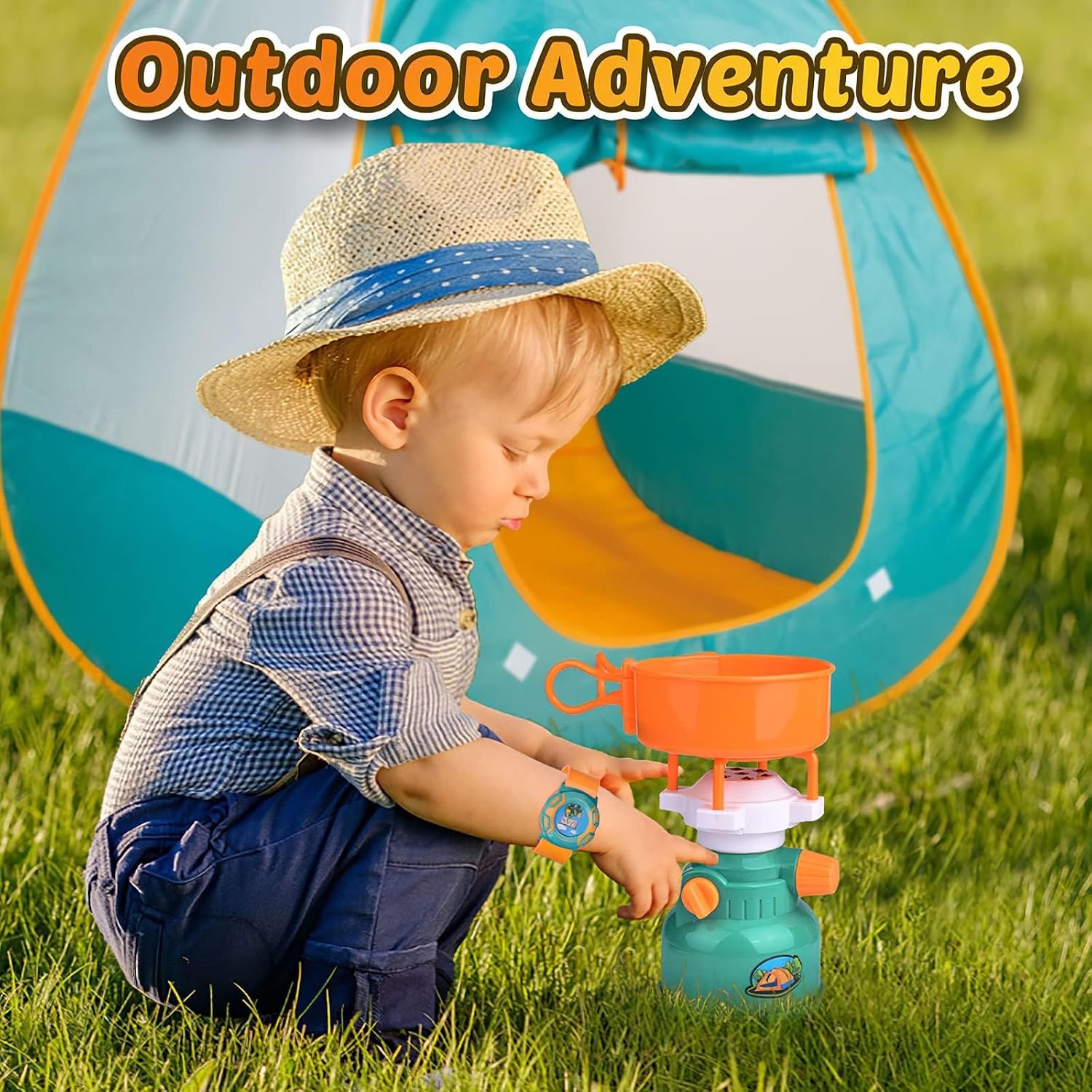
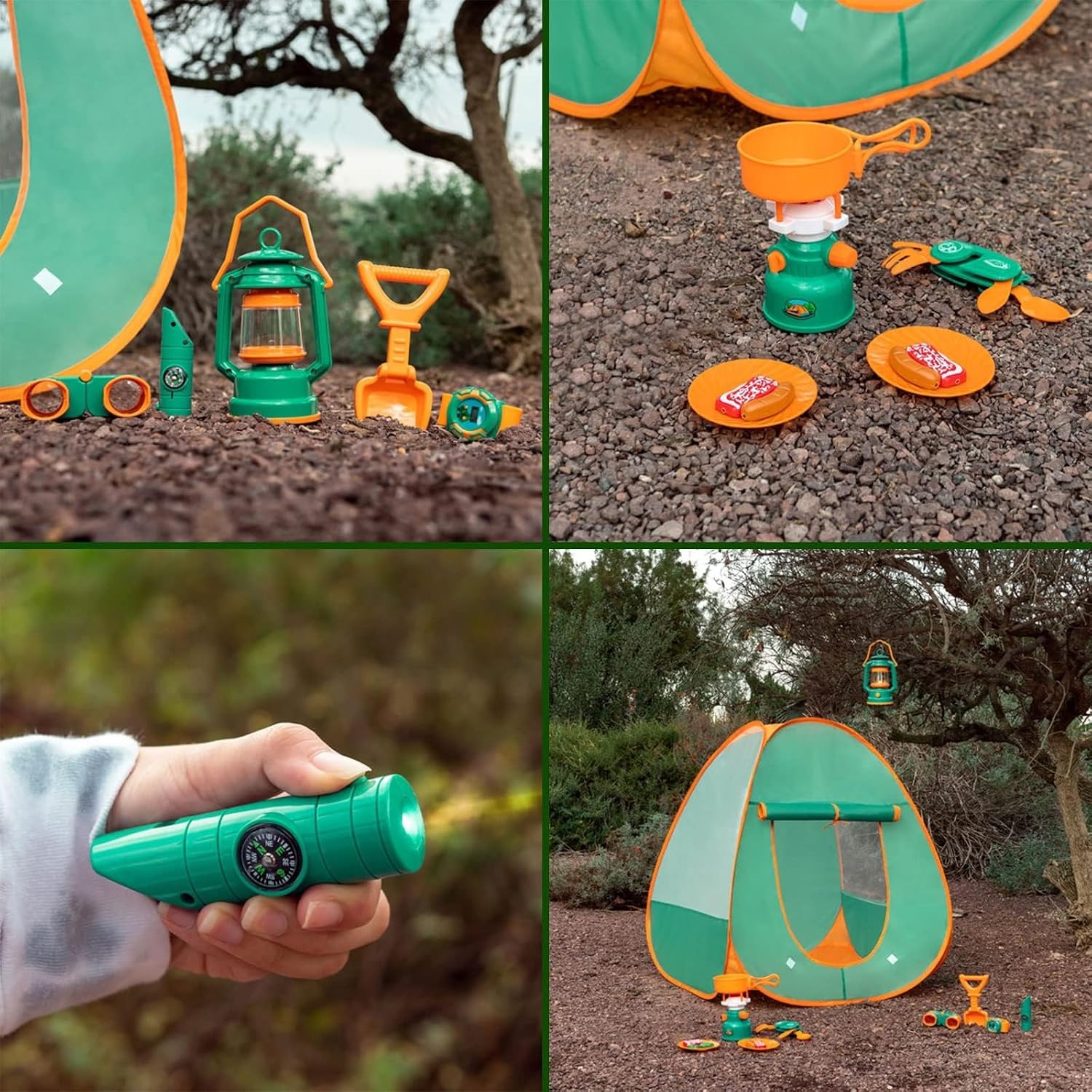
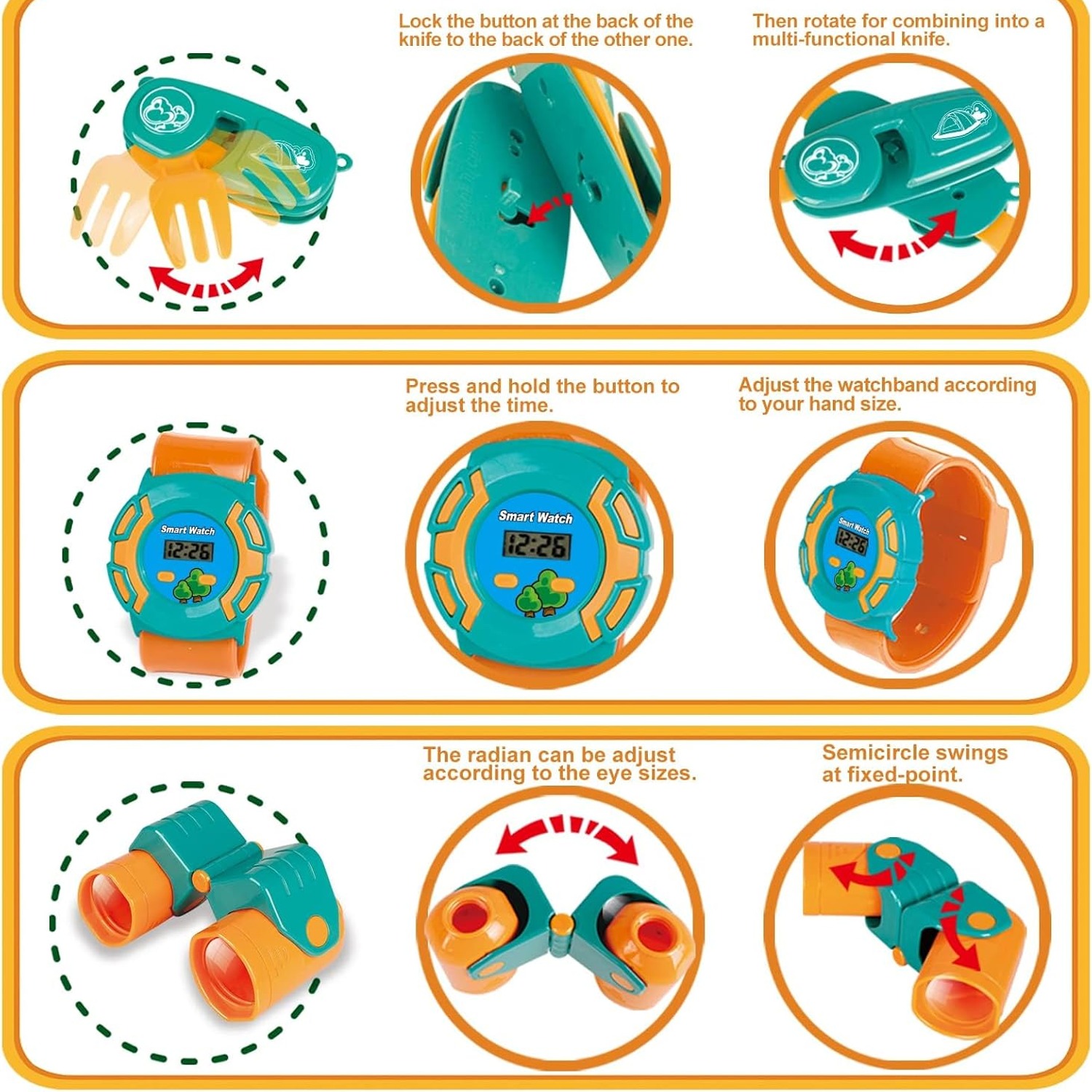
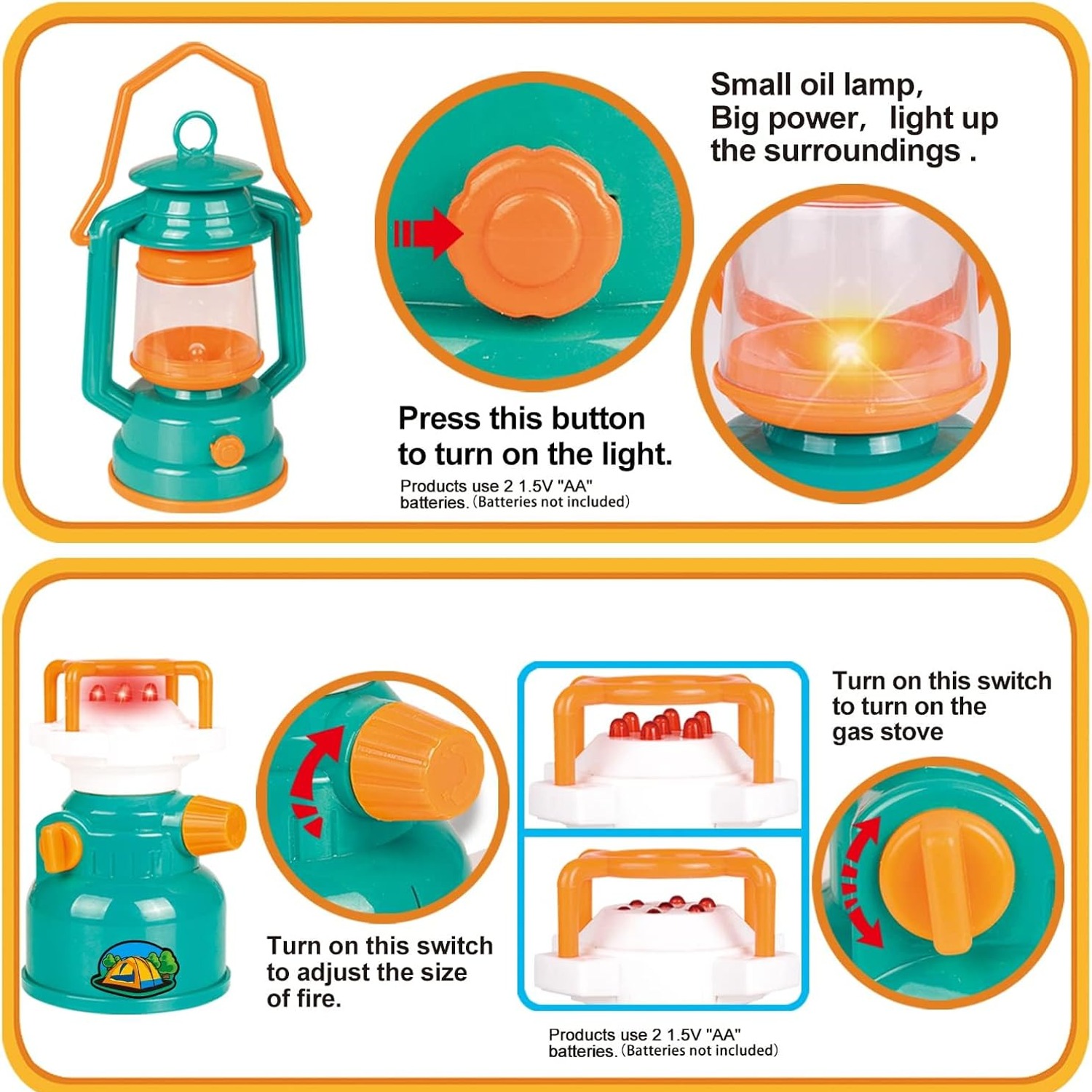
The gear is where the pretend play camping comes alive. There is a lantern that lights up at the press of a button, and a pretend gas stove that glows red like a flame without producing any heat. Both run on 2 AA batteries each. Then there are binoculars, a utility tool, a cooking pan, plates, a shovel, and a multifunctional whistle that also works as a flashlight, compass and thermometer. That whistle tends to be the sleeper hit. Kids love a gadget that does four things.
Nothing in the set needs assembly. You open the box, pop the tent, drop in batteries, and camp is open.
Who it suits
The manufacturer recommends ages 3 and up, and that feels about right. Three and four year olds take to it as a cubby with props. Five and six year olds start running proper games with rules and roles, where someone is the cook and someone is on lookout duty. Older kids often keep using the tent as a quiet reading spot long after they have outgrown the pretend cooking.
It suits families who want their kids off screens without having to supervise every minute. Open-ended toys like this run themselves. You set it up once and then you hear a running commentary from the other room for an hour. For a lot of parents hunting for the best camping toys for 3 year olds, that unsupervised stretch is the actual product.
It also works well for households with limited space. Because the tent collapses, it does not have to be a permanent fixture. Some families set it up on weekends and rainy afternoons only, which keeps the novelty alive.
Where it is less of a fit, honestly, is for children who do not take to imaginative play. Some kids want building, puzzles or physical challenge instead. If a child has never once pretended a box was a spaceship, a camping set may get less use than a construction kit would.
How to choose between play sets
If you are comparing a few options, a handful of things actually matter.
Look at whether the tent collapses or needs to be dismantled. A tent you have to take apart gets left up permanently, and then it becomes furniture. A pop-up folds in seconds, which means it gets put away and stays wanted.
Count the useful pieces rather than the total pieces. Some sets pad the number with tiny filler items. What you want is a handful of props that each suggest an action, cooking, looking, digging, lighting. This set's lantern, stove, binoculars, pan and shovel all pass that test.
Check whether anything lights up or makes noise, and decide whether you want that. Working lights do a lot for immersion, and the glowing stove in particular reads as real to a small child. The trade-off is batteries. Four AA batteries covers both items here. It is worth buying a pack with the set so the first day is not a disappointment.
Think about where it will live. Measure the corner. An 78 centimetre footprint sounds small until it is in the middle of a bedroom floor next to a bed and a toy box.
Finally, consider how it holds up to sharing. Siblings play camping together much more readily than they share a single ride-on or a single doll. A set with plates and multiple roles built in is easier on everyone.
Looking after it
Care is simple, which is part of the appeal. The tent fabric should be spot cleaned with a damp cloth and a little mild soap, then left to air dry fully before you fold it. Do not put it in a washing machine or a dryer. The frame does not like that treatment, and damp fabric folded away in a cupboard will go musty.
The plastic accessories wipe clean with a damp cloth. Keep moisture away from the battery compartments in the lantern and the stove, and dry everything before it goes back in the box.
If the set is going into storage for a season, take the batteries out first. Leaking cells are the most common way a light-up toy dies. Store the folded tent flat, somewhere dry and out of direct sunlight, since strong sun will fade fabric over time.
For the loose pieces, a tub or a drawstring bag saves a lot of grief. Small plates and shovels have a way of migrating under furniture, and keeping them corralled makes the difference between a complete set next summer and a tent with no gear in it.
The short version
This is a pop-up tent with a proper reason to be inside it. You get 18 camping pieces, including a lantern that lights up and a pretend stove that glows, so a child can build a whole campsite in a bedroom corner in under a minute. It needs no assembly, folds flat when you want the floor back, and is recommended for ages 3 and up.
Buy four AA batteries at the same time, pick a corner you can spare, and expect to be invited in for pretend soup within the hour.